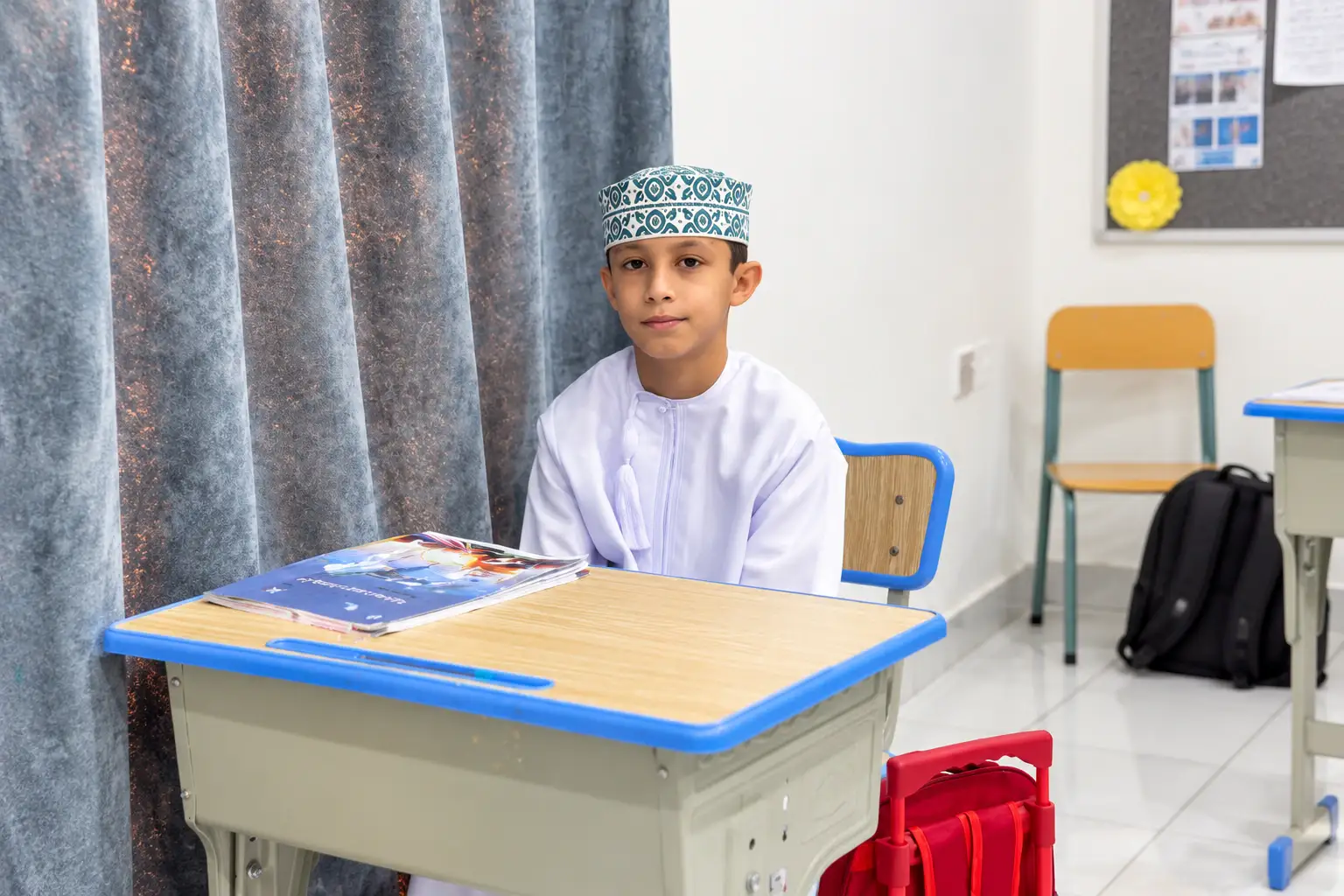
Elementary / Grade 06

ELEMENTARY · GRADE 6

Grade 6 at Al Fasaha Private School

Thinking More Deeply and Taking Greater Responsibility

Grade 6 gives pupils more opportunities to examine information carefully, question assumptions and take greater responsibility for how they approach learning.

Teacher guidance continues to provide structure and clarity, while pupils increasingly make decisions about how to organise, review and improve their own work.

For families considering a Grade 6 private school in Muscat, this stage supports the shift towards more independent, thoughtful and responsible learning.

02  How Children Learn

How Children Learn in Grade 6

By Grade 6, learning can ask more of pupils than remembering information or explaining a single idea.

Children can begin examining how pieces of information relate, whether something is relevant to the question and what may be missing from an explanation.

They may compare two sources, look for patterns, identify differences or consider whether the evidence available is strong enough to support a conclusion.

This requires pupils to slow down and think about the quality of the information they are using.

Teachers continue to explain concepts and provide direction, but pupils can increasingly be encouraged to decide what matters, ask useful questions and take responsibility for making their reasoning clear.

The aim is to help children move from understanding an idea towards analysing and evaluating it.

Looking Beyond the First Answer

The first answer is not always the strongest one.

Grade 6 pupils can be encouraged to ask what else they need to know before reaching a conclusion.

They may notice that a question has more than one possible explanation, that information can be interpreted differently or that something important has not yet been considered.

Learning becomes deeper when children are comfortable pausing before deciding.

Looking Beyond the First Answer

Comparing Information More Carefully

As pupils work with more information, they need to decide what is useful and how different pieces relate.

They can compare sources, examples or approaches and ask whether they support the same idea.

This helps children begin recognising that not all information carries the same value in every situation.

The goal is not simply to collect more. It is to make better use of what has been collected.

Making Decisions and Explaining Why

Grade 6 pupils can increasingly make choices about how to approach a task.

They may decide which information to use, which method seems most appropriate or how best to communicate what they have found.

The important step is being able to explain the decision.

This helps pupils recognise that responsible learning involves both making choices and being able to justify them.


03  The Learning Process

From Information to a Reasoned Decision

A more advanced investigation often involves deciding what to do with several possible pieces of information.

Imagine pupils are considering different explanations for the same situation.

Rather than choosing the first one that seems convincing, they can compare the evidence, identify which details are most relevant and discuss what each explanation does or does not account for.

They may find that one idea initially seems stronger but becomes less convincing after another piece of information is considered.

Pupils can then return to their conclusion and decide whether it still holds.

This process connects analysis, questioning, comparison, judgement and reflection.

01 —

Examine

Look closely at the information available and identify what may be important.

02 —

Question

Ask whether anything is unclear, missing or inconsistent.

03 —

Decide

Reach a reasoned conclusion and explain why it is supported better than the alternatives.

04  Teacher Guidance

The Teacher's Role in Grade 6

Grade 6 pupils need guidance that challenges them without removing responsibility.

Teachers continue to introduce knowledge, clarify difficult concepts and model effective ways of thinking.

They can also ask questions that help pupils become more critical of their own reasoning:

Q1

“Which information matters most here?”

Q2

“Is there anything that challenges your conclusion?”

Q3

“Why did you choose this approach?”

These questions encourage pupils to think about the quality of the decision, not only whether they completed the task.

Teacher support remains available, but pupils are increasingly expected to participate in deciding what the next useful step might be.

05  The Learning Environment

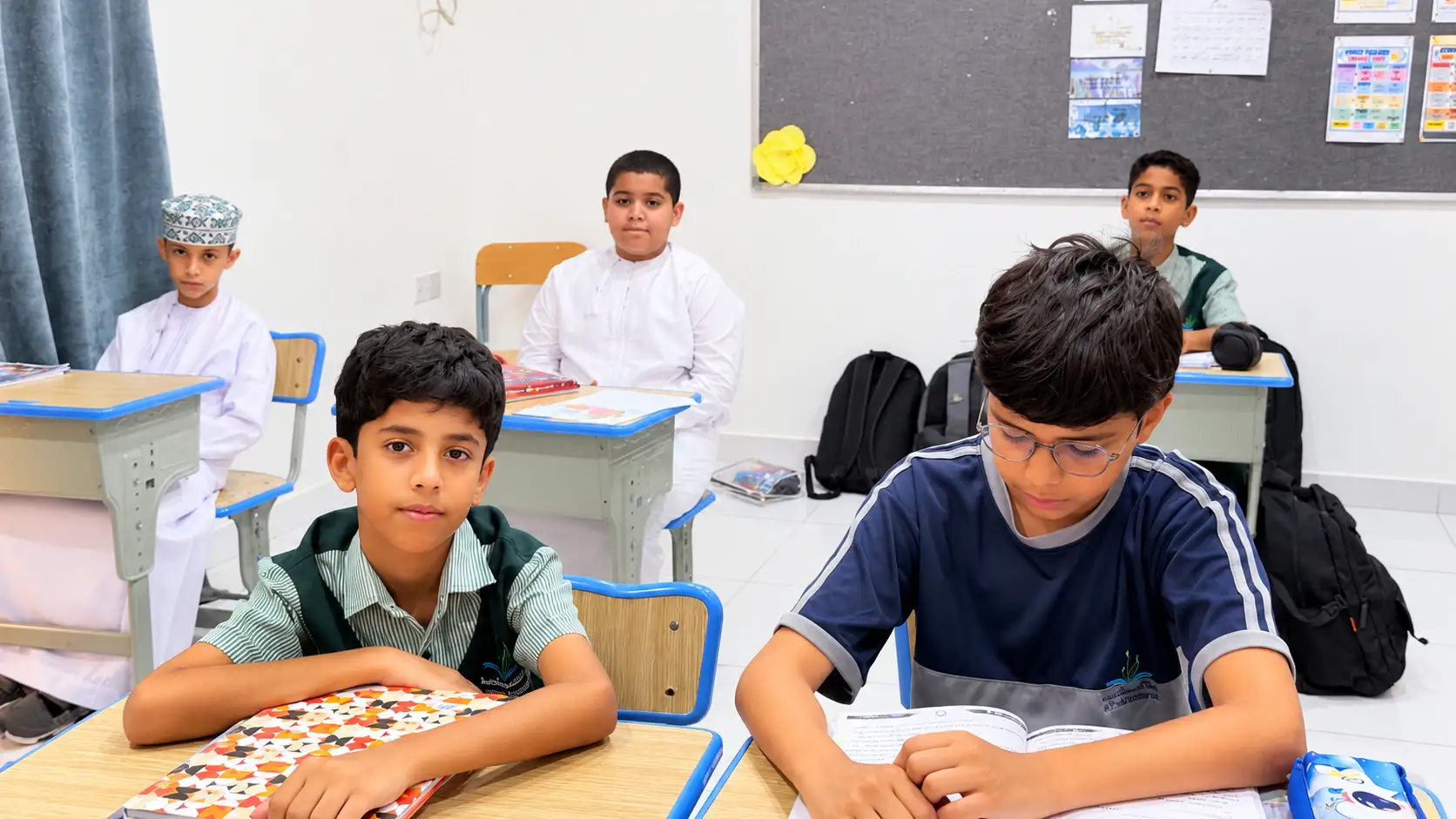
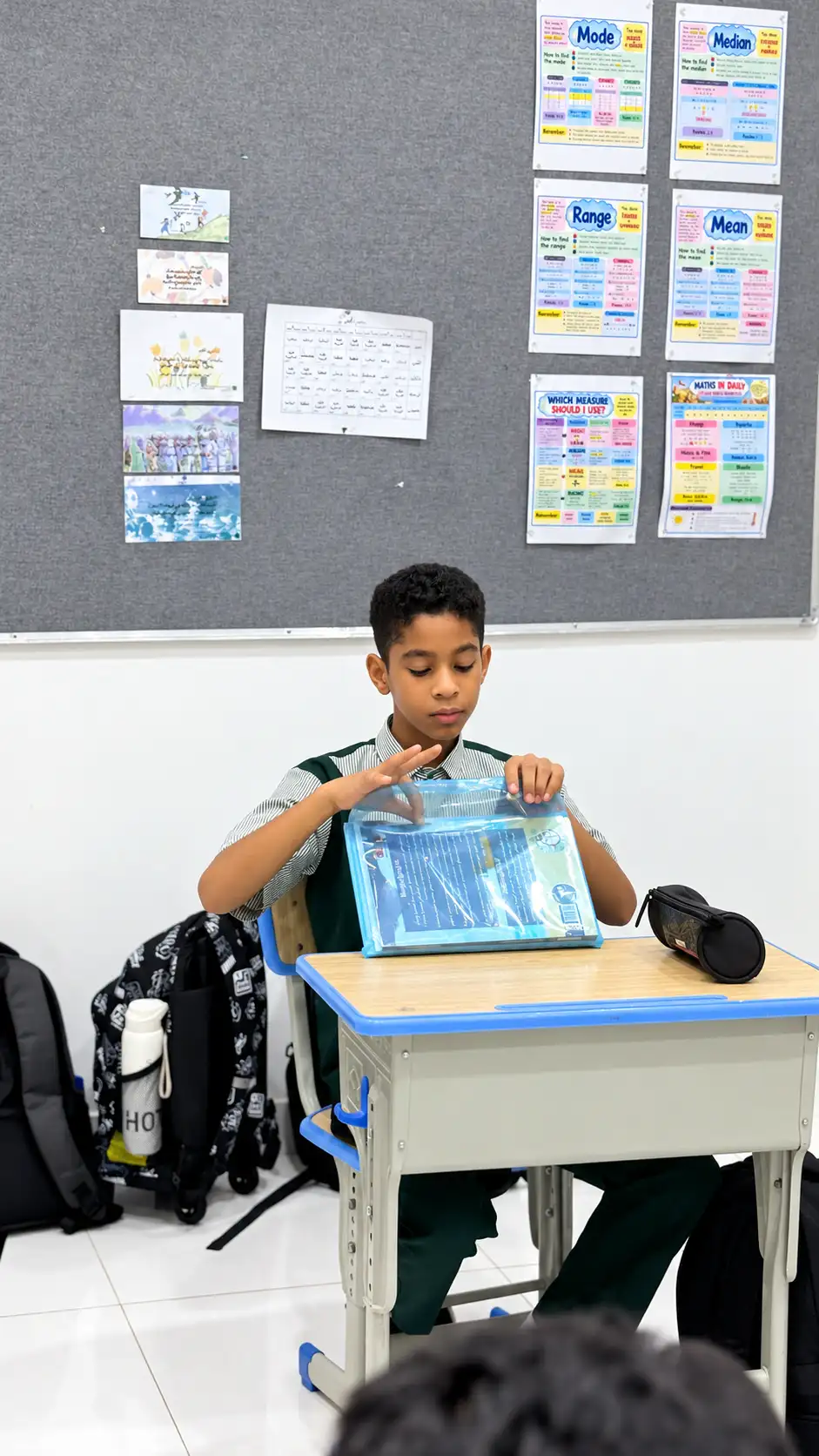
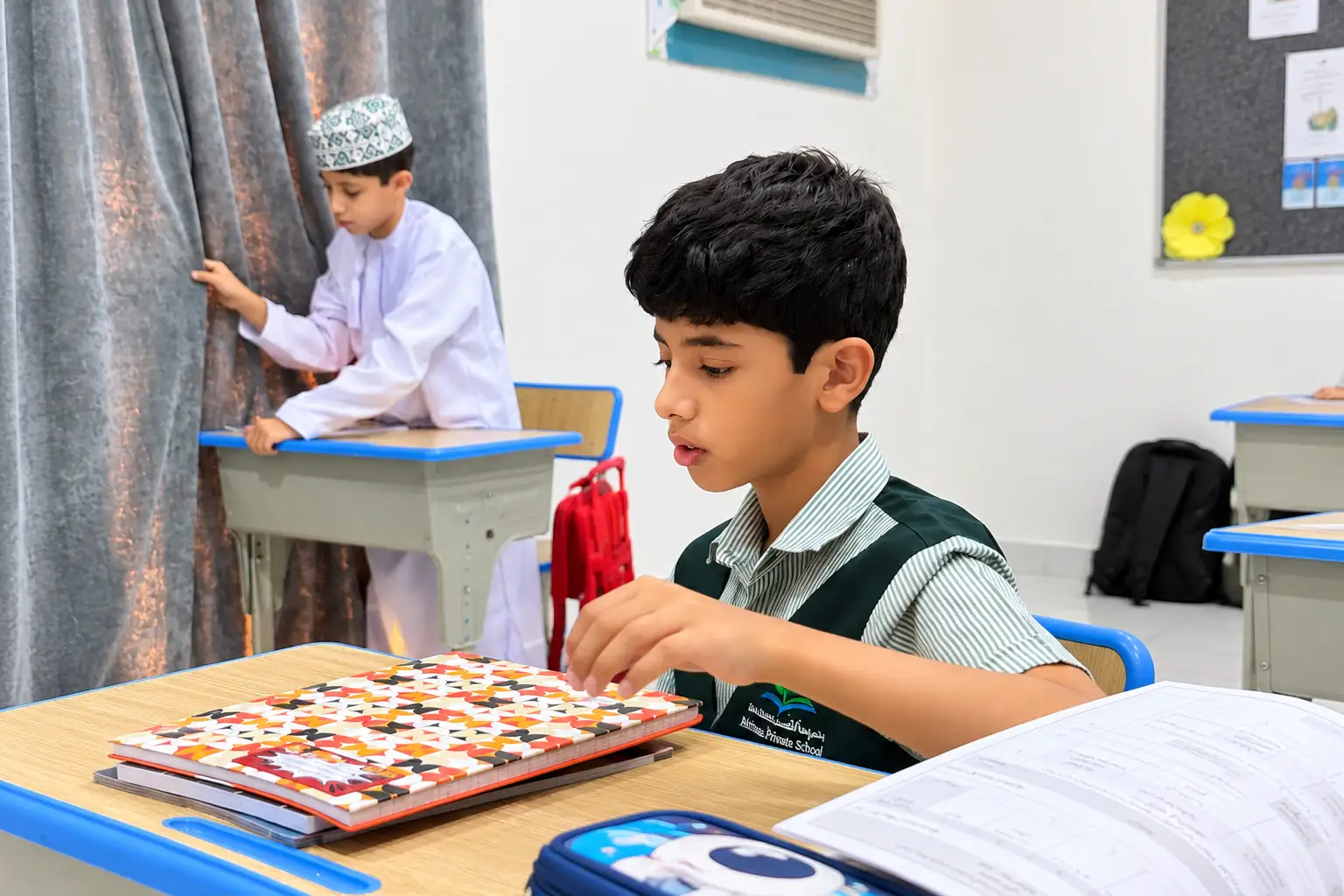
A Classroom That Supports Deeper Thinking

A Grade 6 learning environment can help pupils work with ideas over a longer period rather than treating every task as separate.

A Classroom That Supports Deeper Thinking

Reference materials, pupil work, visual information and examples of different approaches can give children opportunities to compare, reconsider and develop their thinking.

Pupils may return to an earlier conclusion after finding something new or compare their own work with another approach to identify what could be strengthened.

The classroom therefore becomes a place not only for producing work, but also for examining and improving it.

06  Growing Independence

Taking Greater Ownership of Learning

By Grade 6, independence can involve more responsibility for managing both the process and quality of work.

Pupils can begin thinking ahead, monitoring their progress and recognising when an approach needs to change.

The progression might look like:

01 —

Plan

Identify the purpose of the task and decide what information, materials or approach may be useful.

02 —

Monitor

Check whether the chosen approach is working and recognise when something needs to change.

03 —

Evaluate

Review the final work and decide whether the reasoning, evidence and explanation are strong enough.

These habits help pupils move away from relying on the teacher to identify every next step.

Instead of asking only:

“What should I do now?”

they can begin asking:

“What does my work need next?”

and

“How do I know this is strong enough?”

07  Personal Attention

Personal Attention in Grade 6

As pupils become more independent, individual learning needs can become more subtle.

One child may work quickly but need support checking whether an argument is fully supported.

Another may analyse information carefully but find it difficult to make a clear decision.

A pupil may understand a complex idea but hesitate to communicate it confidently.

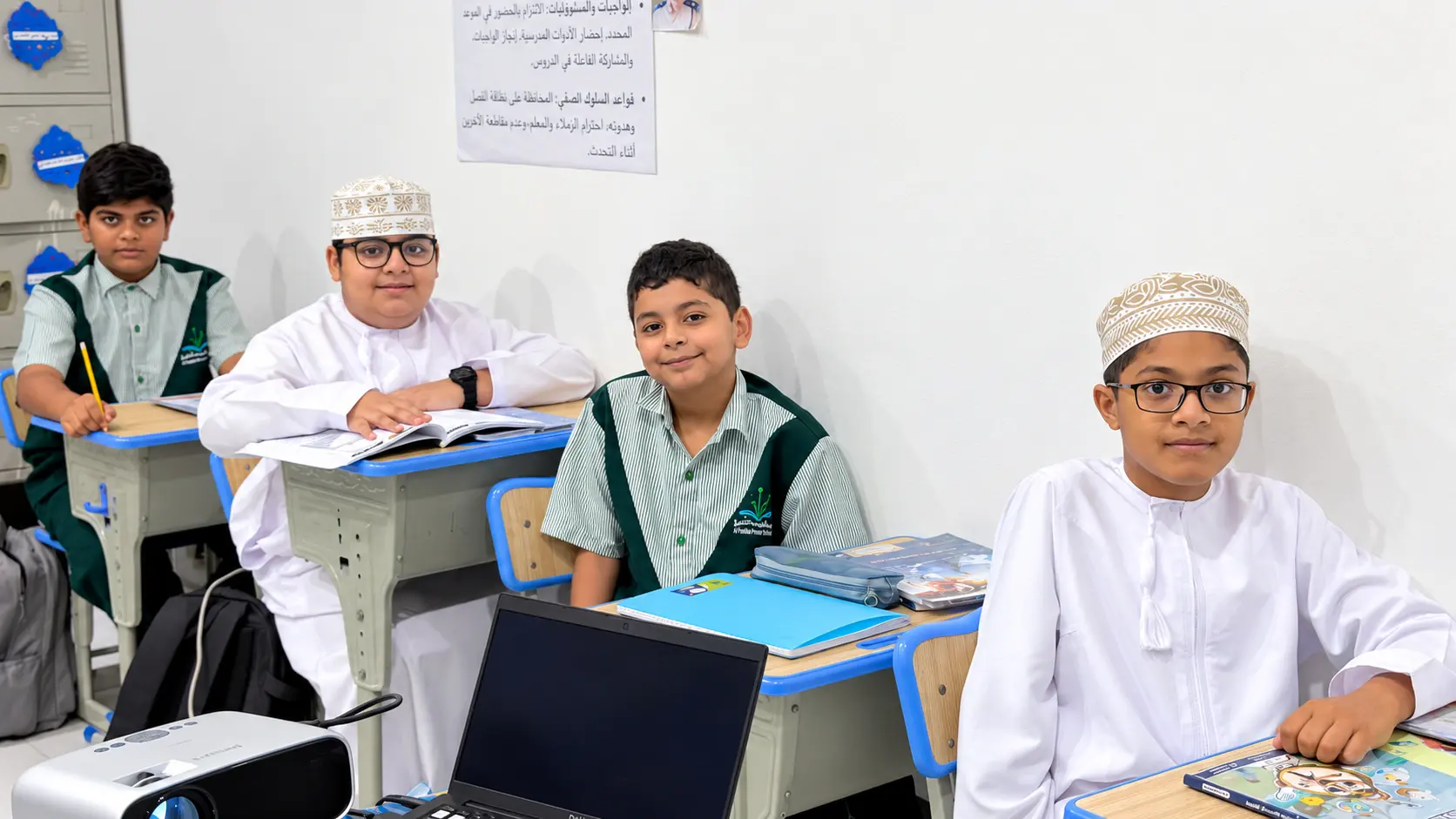
Many A.F.S classes are intentionally small, giving teachers more opportunities to notice these differences and provide focused guidance where it is most useful.

For parents considering a Grade 6 school in Al Khoudh or a private elementary school in Muscat, personal attention at this stage is less about constant supervision and more about recognising when a pupil needs challenge, clarification or another perspective.

Personal Attention in Grade 6

08  For Parents

What Should Parents Look for in a Grade 6 Classroom?

By Grade 6, parents can begin looking for evidence that pupils are becoming more responsible for the quality of their own thinking.

01

Are pupils encouraged to question information?

Children should have opportunities to ask whether something is relevant, complete or convincing.

02

Can they compare different explanations?

More mature learning includes considering alternatives rather than accepting only one possible approach.

03

Are pupils making meaningful decisions?

Children should gradually have greater responsibility for choosing how to organise and approach their work.

04

Can they justify their choices?

A decision becomes more meaningful when the pupil can explain why it was made.

05

Are children learning to review themselves?

Grade 6 pupils should increasingly recognise areas for improvement before relying entirely on teacher feedback.

09  Parent Questions

Grade 6 FAQs

What is learning like in Grade 6 at A.F.S?

Grade 6 combines structured teacher guidance with opportunities for pupils to analyse information, question ideas, make reasoned decisions and take greater responsibility for their own work.

Grade 5 focuses more strongly on reasoning, discussion and refining ideas through different perspectives. In Grade 6, pupils increasingly analyse information, question its relevance and make more independent decisions about how to approach learning.

Pupils can gradually take greater responsibility for planning tasks, monitoring their progress, selecting useful information and evaluating the quality of their own work.

Collaborative learning can include discussion, comparison of evidence and shared problem-solving, allowing pupils to test their reasoning against different perspectives.

Many A.F.S classes are intentionally small. Families can ask about the current Grade 6 class size when contacting the school.

Al Fasaha Private School is located in Al Khoudh, Al Seeb, Muscat, Oman.

Visit Grade 6 at Al Fasaha

As children grow, the learning environment should give them increasing space to think, decide and take responsibility while still providing meaningful teacher guidance.

If you are considering Grade 6 in Al Khoudh, Muscat, visit Al Fasaha, explore the school environment and speak with our team about the Grade 6 learning experience.