

ELEMENTARY · GRADE 7
Grade 7 at Al Fasaha Private School
Evaluating Ideas and Considering Different Perspectives
Grade 7 gives pupils more opportunities to examine not only what information says, but how useful, relevant or convincing it is.
Teacher guidance remains important, particularly when pupils are working with more complex ideas. At the same time, children can take greater responsibility for forming a position, responding to questions and improving their reasoning after discussion or feedback.
For families considering a Grade 7 private school in Muscat, this stage supports the development of thoughtful learners who can listen carefully, think critically and explain where their conclusions come from.

02 How Children Learn
How Children Learn in Grade 7
By Grade 7, pupils can begin working more deliberately with different viewpoints.
A question may no longer have one immediately obvious interpretation. Different pieces of information may point in different directions, and pupils can be encouraged to consider why people might reach different conclusions.
Children can examine what supports an argument, identify information that may be less relevant and ask whether another explanation deserves consideration.
Discussion becomes increasingly useful because pupils are not only sharing ideas. They are testing them.
Teachers continue to provide knowledge, clarification and structure while helping pupils become more deliberate about the decisions they make.
The aim is to move beyond simply forming an opinion towards building a position that can be questioned, explained and improved.
Evaluating Information More Carefully
Not every piece of information is equally useful for every question.
Grade 7 pupils can increasingly ask what a piece of information actually contributes to an explanation.
They may consider whether it is relevant, whether something important is missing or whether another example points towards a different conclusion.
This encourages pupils to become more selective rather than assuming that collecting more information automatically produces a stronger answer.
Comparing Different Perspectives
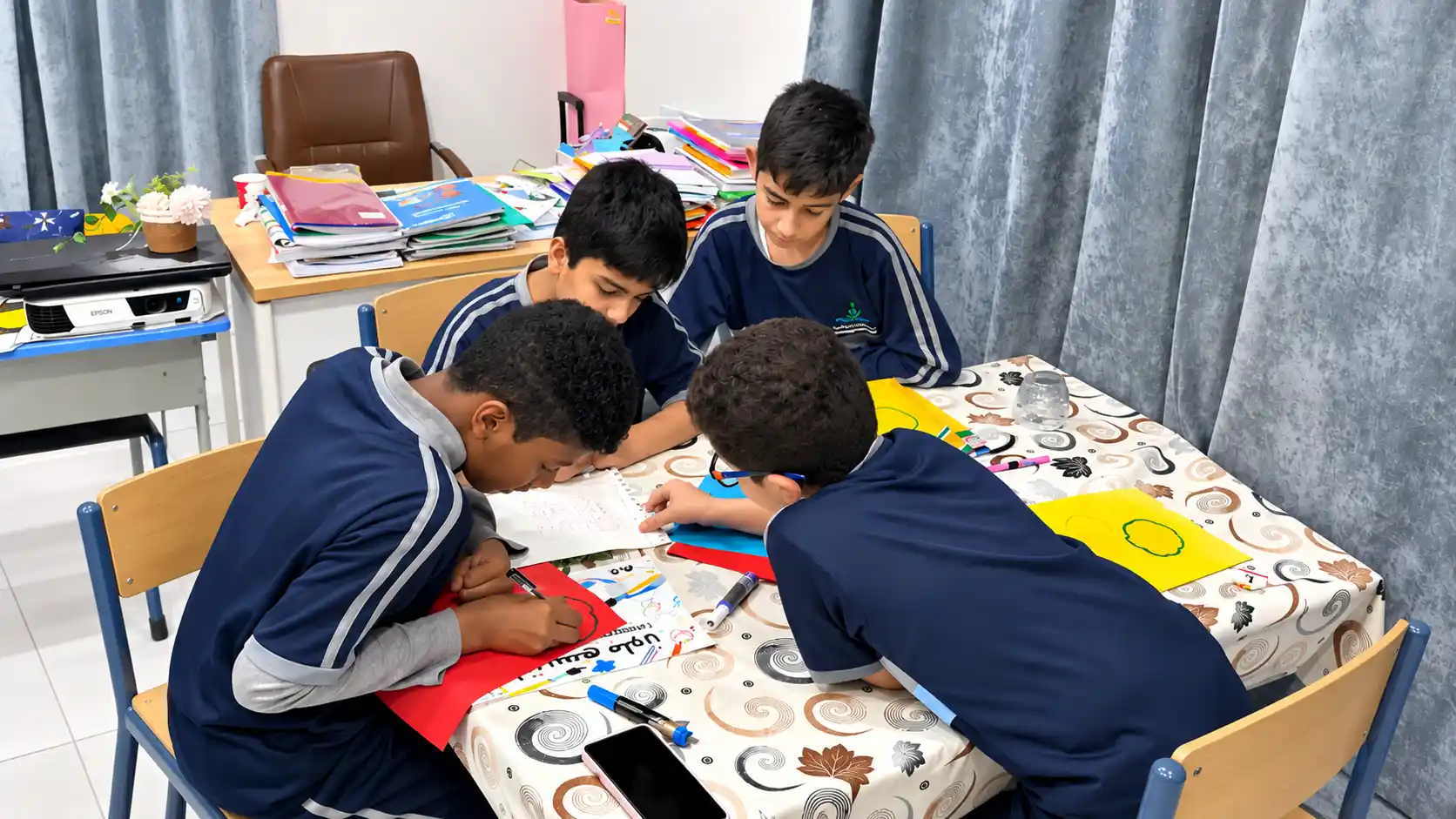
Two thoughtful people can examine the same question and notice different things.
Grade 7 pupils can explore why viewpoints differ and what reasoning lies behind each one.
Rather than immediately deciding which person is “right”, children can compare assumptions, evidence and interpretations.
This gives pupils practice in listening without automatically agreeing and disagreeing without dismissing another person’s thinking.
Defending and Revising a Position
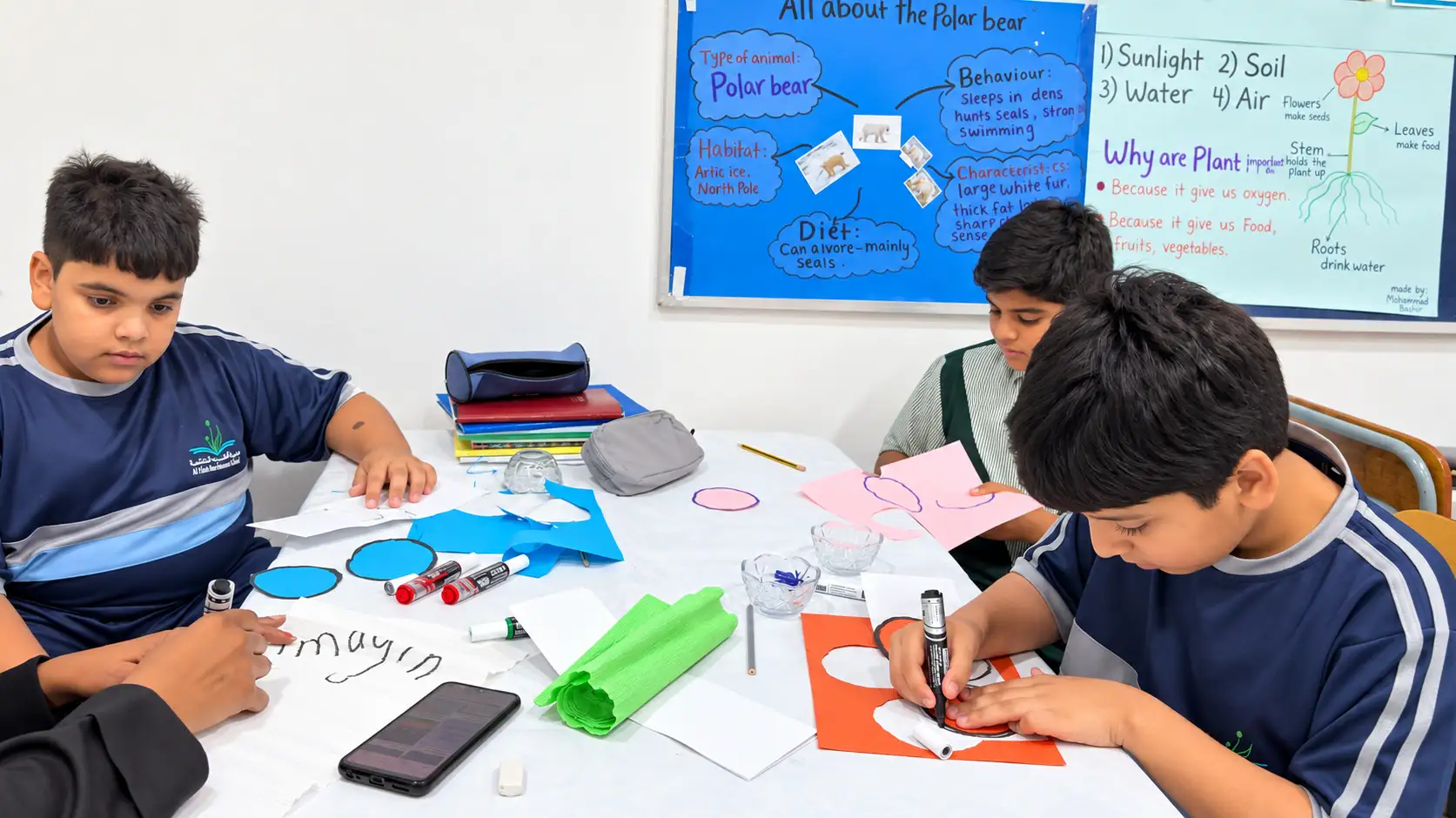
Explaining a position means being able to show how it was reached.
Pupils can increasingly support an idea with relevant information and respond when someone asks a challenging question.
They can also recognise that defending an idea does not mean refusing to change it.
When stronger reasoning or new information emerges, revising a position can be part of thoughtful learning.
03 The Learning Process
From Different Perspectives to a Reasoned Position
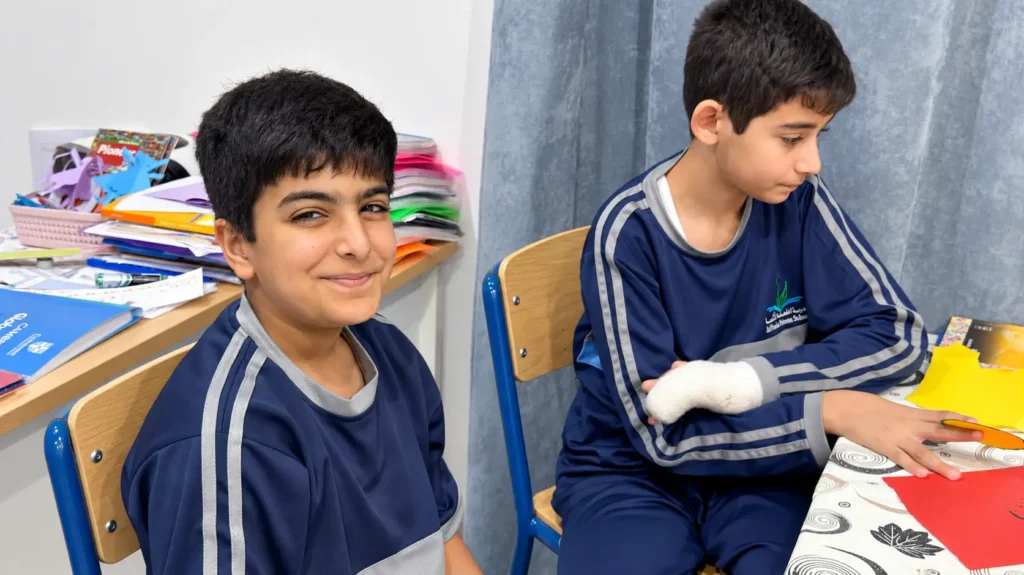
A deeper Grade 7 learning experience can begin when a question allows more than one reasonable interpretation.
Imagine pupils are given several pieces of information that lead to different possible conclusions.
Instead of asking only for the “correct” response, a teacher can invite them to examine which details they consider most important and explain why.
Pupils might work in groups, compare interpretations and challenge one another with questions.
One pupil may notice evidence another group overlooked. Another may realise that the information supporting their original view is weaker than they first thought.
The final conclusion matters, but so does the process used to reach it.
The experience brings together evaluation, perspective, reasoning, discussion and revision.
01 —
Evaluate
Consider which information is most relevant and what it actually supports.
02 —
Compare
Examine another perspective and identify where the reasoning differs.
03 —
Revise
Return to the original position and decide whether it should be defended, strengthened or changed.
04 Teacher Guidance
The Teacher's Role in Grade 7
As pupils become more capable of forming their own positions, teacher guidance can focus increasingly on the strength of the thinking behind them.
Teachers continue to explain new knowledge, clarify difficult ideas and provide structure.
They can also use questions that make pupils examine their reasoning more closely:
“What makes this evidence convincing?”
“What would someone with a different view say?”
“What might make you reconsider your position?”
Questions like these help pupils recognise that a strong argument should be able to withstand examination.
The teacher is not stepping away from the learning process. The role is shifting towards helping pupils become more capable of examining their own assumptions and improving the quality of their decisions.
05 The Learning Environment
A Classroom Where Different Ideas Can Be Examined
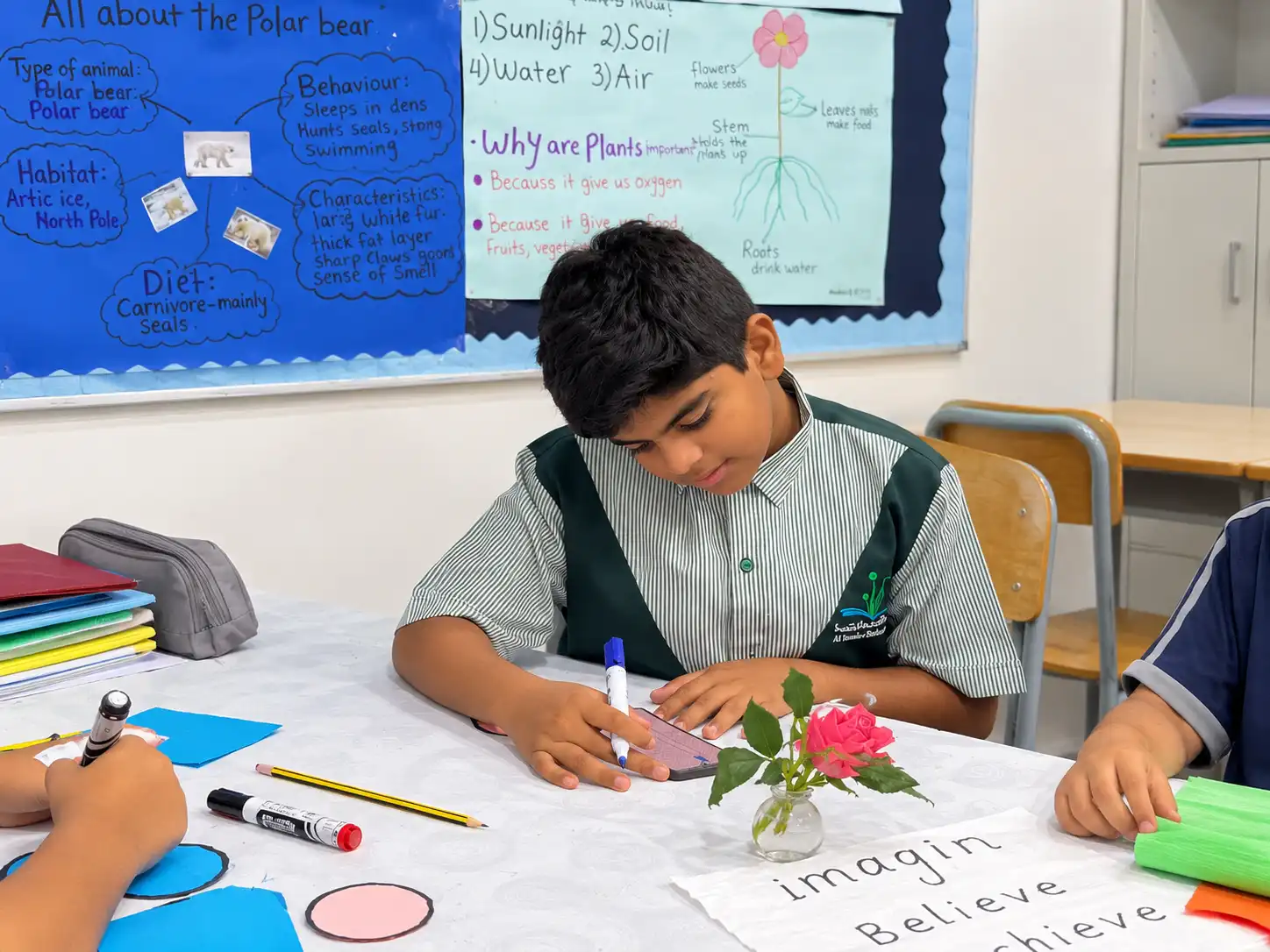
A Grade 7 classroom should create room for ideas to be discussed rather than simply displayed as finished answers.
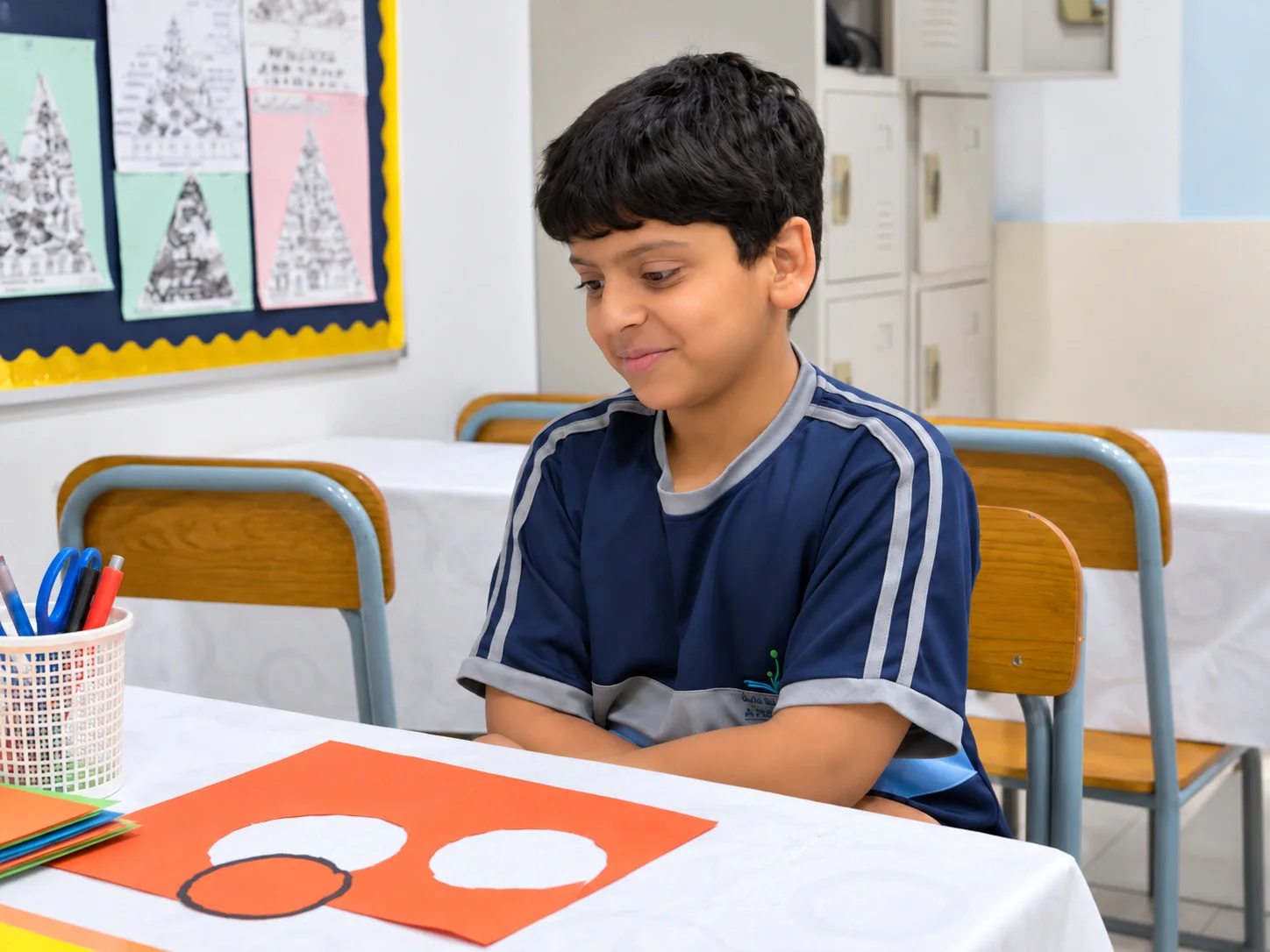
Reference materials, pupil work, written explanations and examples of different approaches can give learners something to question, compare and revisit.
Pupils may return to earlier work after a class discussion and realise that their reasoning needs to be clearer.
They may also compare two approaches and identify what makes one more convincing.
In this environment, disagreement does not automatically mean that something has gone wrong.
Used thoughtfully, it can become a reason to look more closely.
06 Growing Independence
Building Independence Through Judgement
By Grade 7, independence should involve more than working without constant teacher direction.
Pupils can begin taking greater responsibility for judging the quality of their own decisions.
The progression might look like:
01 —
Select
Decide which information or approach is most relevant to the question.
02 —
Justify
Explain why that choice makes sense and what supports it.
03 —
Reconsider
Respond to another perspective or new information and decide whether the original position still stands.
These habits help pupils move away from asking only:
Instead of asking only:
“Is my answer right?”
towards questions such as:
“How strong is my reasoning?”
and
“What would make me change my mind?”
07 Personal Attention
Personal Attention in Grade 7
As pupils grow older, the support they need may become less visible.
A confident speaker may still need help distinguishing a strong argument from an unsupported opinion. Another pupil may analyse information carefully but hesitate to defend a position in discussion. Someone else may find it difficult to reconsider an idea once they have committed to it.
Many A.F.S classes are intentionally small, giving teachers more opportunities to notice these differences and provide appropriate challenge, clarification or encouragement.
For parents considering a Grade 7 school in Al Khoudh or a private elementary school in Muscat, personal attention at this stage can help ensure that increasing independence does not mean pupils are expected to work through every difficulty alone.
Exact class-size figures should still only be published when current data has been confirmed.
08 For Parents
What Should Parents Look for in a Grade 7 Classroom?
By Grade 7, parents can begin looking for signs that pupils are becoming more thoughtful about the quality of information and reasoning they use.
Are pupils evaluating information?
Children should increasingly consider relevance and strength, not simply collect facts.
Are different perspectives explored?
Pupils benefit from understanding why another person may interpret the same question differently.
Can children justify a position?
A Grade 7 learner should increasingly be able to explain what supports an idea.
Can they respond to challenge?
Good learning includes answering questions, considering objections and recognising gaps in reasoning.
Are pupils willing to revise?
Changing an opinion after stronger evidence or reasoning appears should be treated as intellectual growth, not failure.
09 Parent Questions
Grade 7 FAQs
What is learning like in Grade 7 at A.F.S?
Grade 7 combines teacher guidance with opportunities for pupils to evaluate information, compare perspectives, justify conclusions and revise their thinking when appropriate.
How is Grade 7 different from Grade 6?
Grade 6 places greater emphasis on analysing information and making reasoned decisions. In Grade 7, pupils increasingly evaluate the strength of information, work with competing perspectives and defend or reconsider a position.
How does Grade 7 develop independence?
Pupils can gradually take greater responsibility for selecting relevant information, forming conclusions, justifying decisions and reviewing the quality of their own reasoning.
Do Grade 7 pupils work collaboratively?
Learning can include discussion, shared investigation and comparison of perspectives, giving pupils opportunities to test their ideas against the reasoning of others.
Are Grade 7 classes small?
Many A.F.S classes are intentionally small. Families can ask about the current Grade 7 class size when contacting the school.
Where is Al Fasaha Grade 7?
Al Fasaha Private School is located in Al Khoudh, Al Seeb, Muscat, Oman.
Visit Grade 7 at Al Fasaha
As pupils grow older, learning should give them more opportunities to question, evaluate and make informed decisions while still benefiting from thoughtful teacher guidance.
If you are considering Grade 7 in Al Khoudh, Muscat, visit Al Fasaha, explore the school environment and speak with our team about the Grade 7 learning experience.